
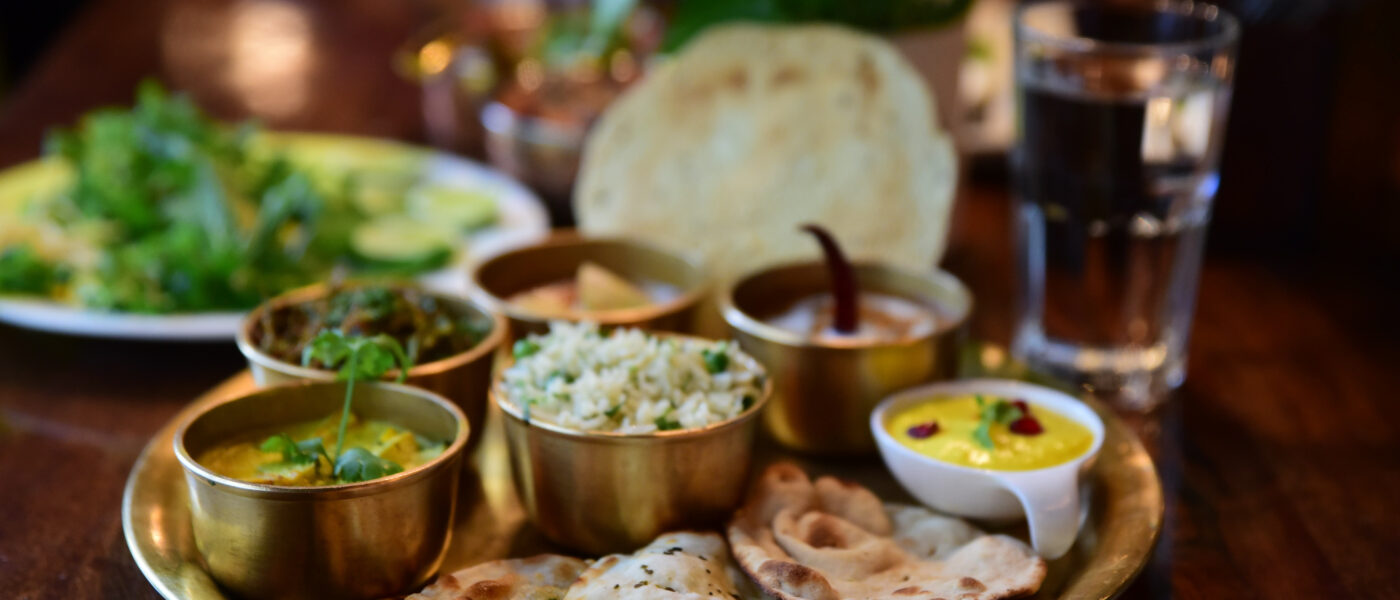
Before 1947, Punjab wasn’t split in two: it was one territory, tied together by its rivers, trade routes, royal courts and village kitchens. That’s the Punjab chef Amninder Sandhu has spent more than a decade trying to piece back together. Her restaurant Kikli, set inside a heritage building in Connaught Place, New Delhi, did well enough to open a second address this month in Gurugram, on the capital’s outskirts.
For ten years, Sandhu crisscrossed the region hunting down recipes on the verge of disappearing, some of them kept alive, barely, by families displaced during Partition. In Gurugram, her menu makes room for dishes few Indian restaurants still bother serving: kadaiyaan lukeya chicken, satpura chaat, chapli kebabs, nalli kachori. Bread, often reduced to naan or tandoori roti outside India, gets some of its lost range back too, including mushki roti, a naturally fermented Punjabi flatbread, and toonhi roti, a cousin of Sindhi koki.
Some dishes, like the slow-simmered dal malka, are still cooked on a hara, the traditional Punjabi hearth fueled by dried cow-dung cakes. It’s a choice that runs against the grain: across India this year, interchangeable pan-Asian and continental menus are losing ground to places built around a single region, a single ingredient, or one chef’s particular obsession.
One dish is conspicuously missing from Kikli’s menu: butter chicken, the default star of Indian restaurants outside India, nowhere to be found in this Punjabi kitchen. It’s a small way to measure the gap between the Punjab most people think they know and the bigger, messier one Sandhu keeps digging up, dish by dish.