
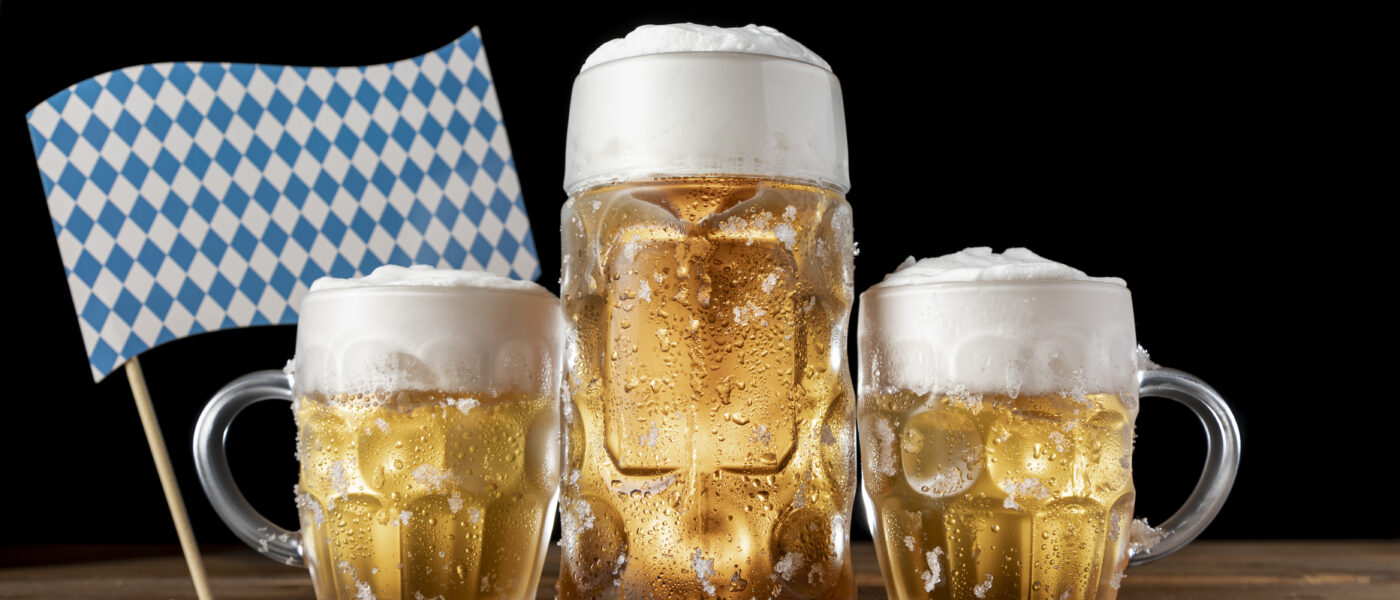
At noon on September 19, Munich’s mayor will drive a tap into a wooden keg to the cry of “O’zapft is!” (“It’s tapped!”). The ritual opens the Oktoberfest every year, and 2026 marks the festival’s 191st edition.
Until October 4, the Theresienwiese will draw millions of visitors chasing beer, pretzels and Schweinshaxe, the roasted pork knuckles that anchor Bavarian cooking. The bill keeps climbing, though: a Maß, the one-liter mug of beer served at every tent, will run between €14.80 and €15.90 depending on where you sit, roughly 2.4% more than in 2025. Only the Augustiner-Festhalle stays under €15, at €14.90. At Kuffler’s Weinzelt, the one large tent that pours nothing but wheat beer, a liter now costs €18.40.
Food prices climbed even faster. Käsespätzle, the cheese-smothered noodles served at the Hacker-Festzelt, are listed at €22.50, up 13% from last year. It’s enough to reignite Munich’s annual argument over what a supposedly working-class tradition should cost.
The schedule itself hasn’t moved. Before the first keg is even tapped, the parade of tent landlords crosses the city in decorated horse-drawn carriages on September 19. The next day, several thousand Bavarians in traditional dress march to the fairground for the costume parade, one of the festival’s most photographed moments.
On paper, Oktoberfest is still a village fair scaled up to a metropolis: fourteen large tents, roughly twenty smaller ones, and a menu that hasn’t really changed in decades. That might be exactly why, price increases notwithstanding, nobody seems ready to give up their Maß.